

Three brands cover most of the cold wallet market today: Tangem, Ledger and Trezor. All three keep your private key offline, and millions of users trust them. However, they differ in how you confirm a transfer, how you back up the wallet and how much you pay.
So we compared their current models side by side to find the best cold wallet for different needs. All prices come from the official stores as of 10 November 2026 and exclude taxes and shipping. If you are new to the topic, start with our guide to what a cold wallet is and how it works.
Contents
- Cold wallet comparison table
- How we compared cold wallets
- Tangem: a cold wallet in a card
- Ledger: the widest choice of devices
- Trezor: open code and a screen
- Which cold wallet to choose
- Spending crypto from a cold wallet
- More about Tangem
Cold wallet comparison table
| Wallet | Price from | Screen | Connection | Backup |
|---|---|---|---|---|
| Tangem Wallet (2 or 3 cards) | $54.90 / $69.90 | No | NFC (phone) | Extra cards, seed phrase optional |
| Tangem Ring (ring + 2 cards) | $160 | No | NFC (phone) | Ring and cards, seed phrase optional |
| Ledger Nano S Plus | $69 | 1.1″ monochrome | USB | Recovery phrase |
| Ledger Nano X | $99 | 1.1″ monochrome | USB, Bluetooth | Recovery phrase |
| Ledger Flex | $249 | 2.8″ E Ink touchscreen | USB-C, Bluetooth, NFC | Recovery phrase |
| Trezor Safe 3 | $59 | 0.96″ monochrome | USB-C | Wallet backup words |
| Trezor Safe 5 | $129 | 1.54″ color touchscreen | USB-C | Wallet backup words |
How we compared cold wallets
We looked at five things that matter in daily use rather than at marketing claims. First, the price of the entry model. Second, whether the device has its own screen to confirm the address. Third, how it connects, for example by cable, Bluetooth or NFC. Fourth, how you restore access if the device is lost. And fifth, how the security is checked: certified chip, open code or independent audits. Finally, all three brands are self-custody wallets, a type explained in our overview of e-wallet types.
Tangem: a cold wallet in a card
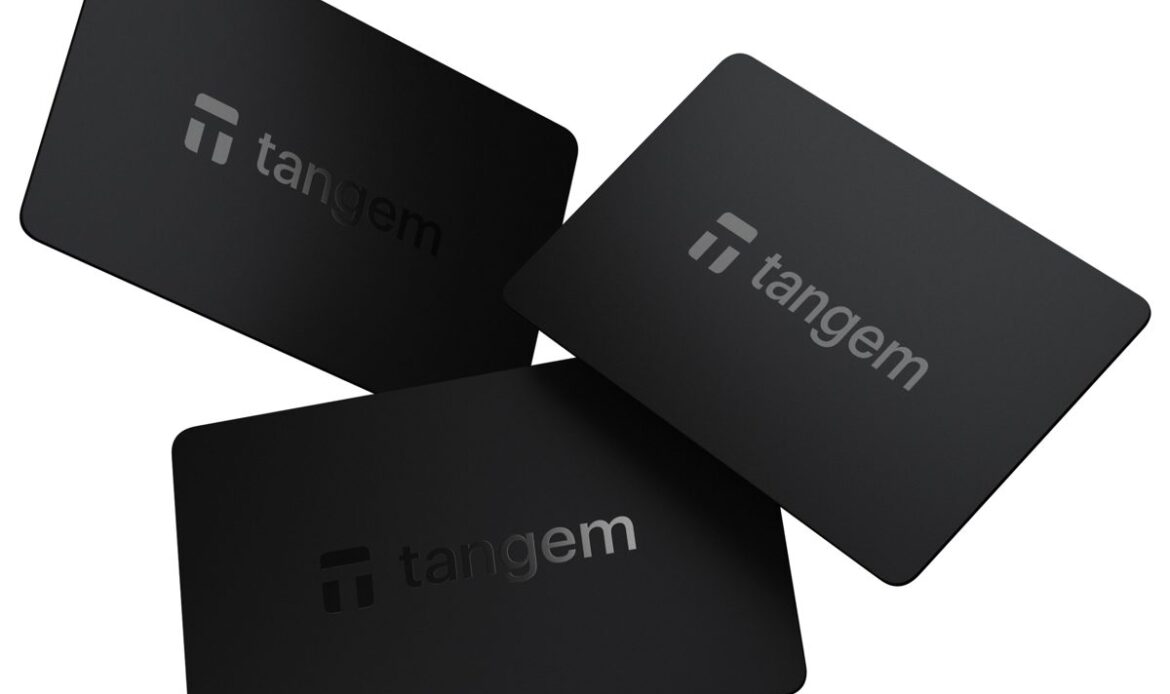
At first glance, Tangem looks like a bank card, and it works with a smartphone over NFC. You tap the card to the phone to sign a transfer, so there is no battery, cable or charging. Meanwhile, a chip certified to EAL6+ and developed with Samsung Semiconductors creates and stores the key.
In addition, it usually comes as a set of two or three cards. Each card holds the same wallet. The extra cards replace the classic paper backup, although a seed phrase remains optional for advanced users.
Pros:
- the lowest entry price among the leaders, from $54.90;
- backup cards instead of a paper phrase, which suits beginners;
- waterproof to IP69K, with a 25-year limited warranty;
- the app is open source, and Kudelski Security and Riscure reviewed the firmware.
Cons:
- no screen of its own, so you confirm the address on your phone;
- needs a smartphone with NFC;
- if all cards are lost and no seed phrase was created, the wallet cannot be restored;
- the card firmware is closed, even though it was audited.
Overall, Tangem suits people who keep crypto for the long term and mostly use a phone. It also makes a good gift or family wallet, because nobody has to write down words.
Ledger: the widest choice of devices
By contrast, Ledger offers the largest range, from the compact Nano S Plus to the touchscreen Flex and Stax. Every model has a screen, so you check the address on the device itself. Also, the secure chips carry EAL6+ certification, except the Nano X with EAL5+.
Pros:
- a screen on every model;
- a choice of form factors and budgets;
- Bluetooth on the Nano X and Flex for use with a phone.
Cons:
- the operating system of the device is closed source;
- the Nano X runs on a battery that wears out over the years;
- touchscreen models cost from $249.
All Ledger devices work with the Ledger Wallet app, which supports more than 500 coins and tokens directly. In addition, you reach many more through over 50 compatible third-party wallets.
Trezor: open code and a screen
Trezor, on the other hand, is known for open source, because anyone can review and verify its code. Moreover, the Safe 3 and Safe 5 add a secure chip certified to EAL6+. However, both connect by USB-C only, without Bluetooth.
Pros:
- fully open source code;
- a screen on every model, including the $59 Safe 3;
- a color touchscreen on the Safe 5.
Cons:
- connection by cable only;
- the Safe 3 has a small monochrome screen and two buttons;
- you must store the backup words yourself.
Like Ledger, Trezor devices work with their own app, Trezor Suite, and support thousands of coins and tokens. The device creates the backup words itself. So write them down on paper or a metal plate, as our guide on how to create a crypto wallet explains.
Which cold wallet to choose
The best wallet depends on how you use crypto rather than on the brand:
- First wallet, phone first, no paper. Tangem: you tap a card instead of writing down words.
- You want to check every address on the device. Ledger or Trezor with a screen.
- Open code is a must. Trezor.
- Many coins and frequent use from a phone. Ledger Nano X or Flex with Bluetooth.
Whichever you pick, therefore, buy only from the official store or an authorised reseller, never second-hand.
Spending crypto from a cold wallet
A cold wallet keeps savings safe, but it does not pay in a shop. So to spend coins, send part of them to a hot wallet connected to a card. For example, the SharPay crypto wallet receives USDC, BTC, ETH, DAI, LTC, XRP and TUSD.
A virtual card you can top up with crypto linked to that balance then pays like a regular Visa or Mastercard card, including Apple Pay and Google Pay.
Need money in a bank account instead? Then our guide on how to cash out crypto shows the route step by step.
More about Tangem
Tangem is a SharPay partner. So our Tangem Wallet guide covers setup in detail and gives a discount with our promo code.